Funny Engineer Svg Bundle: A Designer’s Practical Review
As an embroidery designer who has spent years translating digital concepts into thread, I approach every new machine embroidery design with a mix of curiosity and caution. We have all been there: downloading a file that looks crisp on the screen but turns into a tangled mess of bird nests and puckered fabric once it hits the hoop. Recently, I took a closer look at the Funny Engineer Svg Bundle to determine if it holds up under the scrutiny of real-world production. While this bundle is marketed primarily for glassware wraps, its graphic nature offers intriguing possibilities for textile applications, provided we understand the limitations and strengths of the source material.
First Impressions and Visual Personality
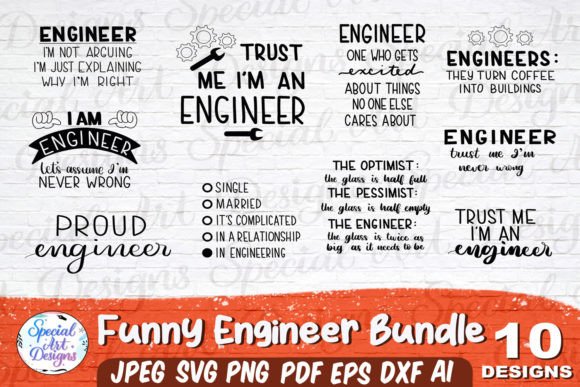
The first thing that strikes you about the Funny Engineer Svg Bundle is its bold, graphic personality. The designs are clean, humorous, and instantly recognizable, capturing the specific wit associated with engineering culture. From a visual standpoint, these graphics rely heavily on strong lines and clear shapes rather than subtle gradients or photorealistic details. This is generally good news for embroidery, as complex shading rarely translates well to thread. However, because this is originally an SVG bundle intended for vinyl cutting or sublimation on 16oz Libbey glasses, we must mentally convert these vector paths into stitch patterns.
The mood is lighthearted and professional enough for workplace gifts but casual enough for personal wear. It fits squarely into the Crafts category, appealing to makers who want to create personalized items that spark conversation. For an Etsy seller or small shop owner, this type of niche-specific humor is gold. It targets a specific audience—engineers, students, and tech enthusiasts—who are often difficult to shop for. The visual clarity of the design means it can stand out even from a distance, which is crucial for apparel and home decor.
Translating Graphics to Embroidery Projects
When I consider using these graphics for a custom apparel project, my mind immediately goes to sturdy fabrics. A heavy cotton tote bag or a structured canvas apron would be ideal candidates. The bold lines of the Funny Engineer Svg Bundle would translate beautifully into a combination of satin stitch borders and fill stitch interiors. For a sweatshirt, I would recommend digitizing the design with a lighter touch to maintain the softness of the garment. Using a running stitch for finer details can prevent the fabric from becoming stiff or board-like, which is a common complaint with dense embroidery on fleece or jersey knits.
I recently simulated a project using one of the designs for a personalized gift: a canvas tote bag for a graduating engineering student. The graphic nature of the bundle allowed for high contrast against the natural beige fabric. By selecting deep navy and bright orange thread colors, I was able to mimic the vibrant look of the original digital asset. The result was a professional-looking handmade product that felt substantial and valuable. This demonstrates that while the source is a digital embroidery file alternative (SVG), the end result can be just as impactful when properly adapted for needle and thread.
Navigating Technical Challenges
It is important to address where this design requires careful handling. Since the Funny Engineer Svg Bundle was created for smooth, curved glass surfaces, it lacks the inherent stitch data needed for textiles. If you are converting these SVGs yourself or working with a digitizer, you must pay close attention to stitch density. On thin fabric, such as a lightweight t-shirt or a baby onesie, high-density fill stitches can cause significant puckering. Always use a appropriate stabilizer—cut-away for stretchy knits and tear-away for stable wovens—to support the stitching process.
Another consideration is the hoop size. Some of the more intricate elements in the bundle might include small text or fine geometric details. In embroidery, tiny lettering can easily become illegible if the stitch count is too low or if the thread thickness is too heavy. I recommend testing the design on scrap fabric first, specifically checking how the smallest elements render. If you are planning to use this on a cap or a curved surface, be mindful of distortion. The rigid geometry of engineering-themed graphics can look warped if not hooped perfectly straight and tight.
Commercial Viability and Brand Consistency
For commercial embroidery professionals and craft business owners, the versatility of this bundle is a major selling point. It allows for the creation of a cohesive product line. Imagine offering matching sets: an embroidered patch for a laptop bag, a towel for the office kitchen, and a pillow cover for the home office. This consistency builds brand trust and encourages multiple purchases. The humorous angle also increases shareability on social media, which can drive traffic to your small shop product listings.
However, before listing any finished items, you must verify the licensing terms. Just because a file is labeled as an SVG bundle does not automatically grant commercial rights for embroidered goods. Always confirm whether the license covers physical products sold for profit. Additionally, since this is a Graphics product, ensure you have the right to modify and digitize the vectors for embroidery use. Many designers appreciate the flexibility of SVGs, but the transition to a stitched format is a value-added service you are providing to your customer.
Practical Designer Notes
To get the best results from the Funny Engineer Svg Bundle, keep these practical tips in mind:
- Test on Scrap Fabric: Never run a new design on your final product without a test stitch-out. Check for thread breaks and registration issues.
- Contrast is Key: Ensure your thread colors stand out against the fabric. Dark threads on dark fabrics will hide the detail of the engineering graphics.
- Check Stitch Density: If digitizing yourself, reduce fill density for stretchy fabrics to prevent distortion.
- Verify Hoop Size: Confirm that the design fits within your machine’s maximum hoop area, especially if scaling up for larger items like blankets.
- Inspect Small Details: Zoom in on the digital file to identify any tiny elements that may need to be simplified or removed for embroidery.
- Mockup in Black and White: This helps you see the value and contrast of the design without the distraction of color, ensuring the shape reads clearly.
In conclusion, the Funny Engineer Svg Bundle is a promising asset for designers willing to put in the legwork of proper digitization and material selection. It offers a unique blend of humor and professionalism that resonates with a specific, loyal demographic. Whether you are creating a holiday embroidery gift for a colleague or stocking your online store with embroidered patch designs, this bundle provides a solid foundation. Just remember that the jump from screen to stitch requires technical precision. With the right stabilizer, thread choice, and attention to detail, you can transform these flat graphics into textured, tactile works of art that customers will love to wear and use.