Review: Funny Doormat SVG Did You Call First
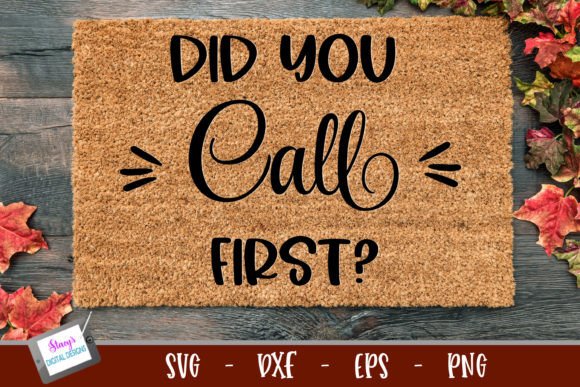
As a designer who spends half my life digitizing and the other half stitching, I have learned that not every graphic translates well to thread. When I first pulled up the Funny Doormat SVG Did You Call First from Stacy’s Digital Designs, my initial reaction was one of cautious optimism. The phrase is undeniably catchy, tapping into that modern, slightly sassy humor that sells well in boutique markets. But as embroidery professionals, we know that what looks crisp on a screen can turn into a tangled mess under the needle if the design isn’t vetted properly.
First Impressions and Visual Personality
The mood this design creates is immediate. It is playful, boundary-setting, and perfect for the current trend of personalized home goods. Visually, the layout appears straightforward, which is often a blessing in disguise for machine embroidery. Complex, overly detailed graphics often fail when scaled down, but this design relies on strong typography and clear spacing. For those of us working in Crafts and digital Graphics, clarity is king. The visual personality suggests a project that doesn’t take itself too seriously, making it an ideal candidate for gifts that need to spark a laugh rather than just admiration.
Real-World Application Beyond the Doormat
While the product description highlights its use for doormats, my mind immediately went elsewhere. As an embroidery reviewer, I look for versatility. This design is not just for coir mats. I tested the concept mentally against several common projects. Imagine this stitched onto a heavy canvas tote bag design for a librarian or a remote worker. The humor lands perfectly there. It also works exceptionally well as sweatshirt embroidery for casual wear. The text is short enough to fit across the chest without requiring excessive hoop changes or complex multi-hoop alignments.
I also considered its potential for custom apparel like aprons. A kitchen apron with this message adds a layer of personality to cooking gifts. For Etsy sellers and small shop owners, this kind of versatile asset is gold. You can market it as a housewarming gift, a funny birthday present, or even a quirky addition to a nursery if the font style permits a softer touch. The key is recognizing that the "doormat" label is just a starting point, not a limitation.
Stitching Performance and Technical Considerations
When evaluating any machine embroidery design, I always think about stitch behavior. Since this is provided as an SVG, PNG, DXF, and EPS, it is primarily a cut file format suite. However, many crafters convert these shapes into embroidery files using auto-digitizing software or manual digitizing tools. If you are converting this yourself, pay close attention to stitch density. Text-based designs can become dense quickly if you rely too heavily on satin stitch for larger letters. I recommend using a combination of satin stitch for smaller elements and fill stitch for larger blocks to prevent puckering.
If you are using a pre-digitized version or creating your own from these vectors, consider the running stitch for outlines to keep the profile low. This is crucial for items like embroidered patch projects or thin fabrics where bulk is the enemy. The design’s simplicity means it should stitch out cleanly, but only if the underlying vector paths are smooth. Jagged edges in the SVG will translate to jagged stitches, so always clean up your nodes before digitizing.
Fabric and Hoop Constraints
Where should you use this design carefully? Any text-heavy design requires legibility. On textured fabrics like terry cloth towels or rough linen, fine details can get lost. If you are stitching this on a tea towel or a plush blanket, ensure your thread color contrasts sharply with the fabric. A dark thread on a dark fabric will render the joke invisible. Also, be mindful of hoop size. While the design might fit in a 4x4 hoop, giving it breathing room in a 5x7 or 6x10 hoop often results in a more professional-looking finished product.
Curved surfaces like caps present another challenge. If you plan to put this on a hat, you must account for the curvature. Distortion can make text look warped. Always test on a curved dummy or scrap piece first. For stretchy fabrics like jersey tees, a proper stabilizer is non-negotiable. Without it, the tension of the stitches will pull the fabric, distorting the letters and ruining the comedic timing of the message.
Commercial Viability and Brand Trust
For commercial embroidery professionals and craft business owners, this design offers high perceived value with low production time. Quick-stitching designs mean higher throughput. However, buyer engagement depends on presentation. Use high-quality printable mockup images to show how the design looks on various products. Customers need to visualize the humor in context. Does it look cheap on a white tote? Does it pop on a navy sweatshirt? Your mockups answer these questions before the customer even asks.
Brand consistency is also vital. If your shop specializes in elegant, minimalist decor, this sassy design might clash. But if your brand voice is fun, relatable, and modern, this asset fits seamlessly. It builds trust because it shows you understand current cultural trends. A well-executed personalized gift featuring this design can lead to repeat customers who appreciate your wit and quality.
Practical Designer Notes
Before you commit to a full production run, follow these steps:
- Test on scrap fabric: Never stitch directly on your final garment. Check for registration issues and thread breaks.
- Check thread color contrast: Ensure the message is readable from a distance. High contrast equals high impact.
- Review stitch density: If digitizing from the SVG, avoid over-packing stitches. Let the fabric breathe.
- Confirm hoop size: Measure the design dimensions against your machine’s maximum hoop capacity.
- Inspect small details: Zoom in on the vector file. Are there stray nodes or open paths that could cause digitizing errors?
- Test in black and white: This helps you see the structure of the design without the distraction of color.
- Verify licensing: The product description mentions it is from Stacy’s Digital Designs. Always confirm if the license allows for commercial use of finished physical items. Most SVG licenses allow this, but digital resale of the file itself is usually prohibited.
In conclusion, the Funny Doormat SVG Did You Call First is a solid addition to any designer’s library. It is versatile, timely, and technically manageable if approached with care. Whether you are creating holiday embroidery gifts or stocking your small shop product line, this design offers a blend of humor and practicality that resonates with today’s buyers. Just remember to respect the technical limits of your machine and materials, and you will produce a handmade product that stands out for all the right reasons.