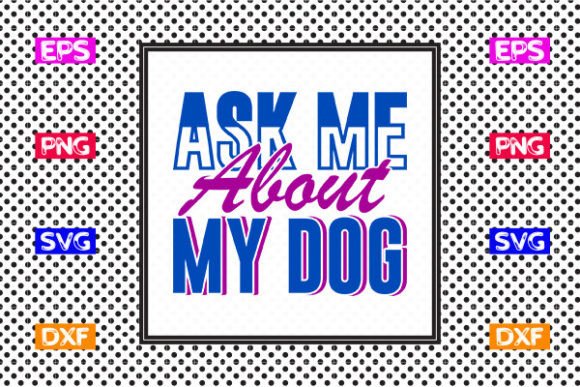
Review: Funny Mom SVG Design – Ask Me About My Dog
As a designer who spends half my life digitizing and the other half stitching, I have learned to look past the flashy thumbnails. We all know that what looks crisp on a screen can turn into a tangled mess of thread on fabric. When I first pulled up the Funny Mom SVG Design- Ask Me About My Do, my immediate reaction was one of cautious optimism. The concept is timeless—pet owners love nothing more than talking about their furry companions—but the execution in embroidery requires a delicate balance between readability and stitch efficiency.
This isn’t just another generic clipart file. It is a piece of Graphics content that needs to translate effectively into the tactile world of Crafts. In this review, I am evaluating this design not as a digital asset alone, but as a potential centerpiece for real-world products. Whether you are an Etsy seller looking to expand your small shop product line or a hobbyist making a personalized gift, understanding how this design behaves under the needle is crucial.
The Visual Personality and First Impressions
The mood of this design is playful yet clean. The phrase "Ask Me About My Dog" suggests conversation, warmth, and pride. Visually, the layout appears balanced, avoiding the clutter that often plagues text-heavy embroidery files. For a machine embroidery design to work, the negative space is just as important as the stitched areas. This design seems to respect that boundary, offering enough breathing room so that the text does not bleed into itself during high-speed stitching.
The visual personality fits perfectly into the current trend of casual, conversational apparel. It does not scream for attention with excessive ornamentation; instead, it relies on typography and perhaps a subtle graphic element to carry the message. This simplicity is a strength. It means the design is versatile enough to sit on a tote bag design without overwhelming the canvas, yet bold enough to stand out on a dark sweatshirt embroidery project.
Real-World Application: The Tote Bag Test
To truly judge a design, I imagine it on a specific item. Let’s consider a heavy cotton canvas tote bag. This is a staple for any craft business. If I were using this embroidery file for a custom order, I would likely choose a contrasting thread color to make the text pop against the natural beige of the canvas. The sturdy nature of the fabric supports the stitch density well, preventing puckering.
However, the real test is customer reaction. A buyer picking up this tote at a craft fair or seeing it in an online printable mockup is looking for relatability. This design delivers that. It acts as an icebreaker. For commercial embroidery projects, this kind of emotional connection drives sales. It transforms a simple bag into a statement piece. The design’s clarity ensures that even from a distance, the message is legible, which is vital for brand recognition if you are building a niche around pet lovers.
Technical Considerations for Stitching
Now, let’s talk about the mechanics. Since this product includes EPS, SVG, PNG, and DXF files, it is primarily positioned as a cut file resource, but many of us use these vectors as the basis for creating or adjusting our digital embroidery file workflows. If you are converting this for embroidery, pay close attention to the stitch density.
Text-based designs can be tricky. If the letters are too thin, they may require a satin stitch that is too narrow to hold up over time. If they are too wide, the fill stitch area becomes dense and stiff. I recommend testing this on scrap fabric first. Check if the small details, such as the crossbars in letters like 'A' or 'H', bridge correctly. You do not want threads breaking or gaps appearing in the final finished product.
Also, consider the hoop size. This design likely fits comfortably in a standard 4x4 or 5x7 hoop, making it ideal for baby embroidery items like onesies or burp cloths. However, if you plan to scale it up for a blanket, ensure the resolution holds up. Pixelation in the source SVG or PNG can lead to jagged edges in your digitizing software, resulting in poor stitch paths.
Fabric and Surface Challenges
Not every surface is forgiving. While this design works beautifully on stable fabrics like cotton twill or denim, it requires caution on stretchy materials. If you are applying this to a fitted t-shirt, you must use a high-quality stabilizer to prevent distortion. The weight of the thread can pull lightweight fabrics, causing the garment to warp after washing.
Curved surfaces present another challenge. Embroidering this on a cap or hat requires careful hooping. The text must follow the curve of the front panel without stretching. If the design is too wide, it might wrap around the sides, distorting the message. I advise checking the width dimensions against your specific cap frame before committing to the stitch-out.
Dark fabrics require strategic thread colors. A light thread on a black hoodie looks striking, but ensure you have enough contrast. Sometimes, adding a subtle backing or using a thicker thread weight can enhance visibility. Always test on the actual fabric type you intend to sell, as fabric texture plays a huge role in how the stitches settle.
Commercial Viability and Brand Consistency
For Etsy sellers and creative entrepreneurs, consistency is key. This design fits well within a broader collection of pet-themed design assets. It allows you to create a cohesive brand identity. You can pair it with matching applique design elements or coordinate it with other humorous sayings to create a full product line.
The versatility of the file formats provided—EPS, SVG, PNG, DXF—means you can use this across multiple platforms. You can create printable mockup images for your online store using the PNG, while using the vector files for cutting vinyl or digitizing for embroidery. This multi-use capability increases the value of the purchase, making it a smart investment for a small shop product strategy.
Practical Designer Notes
- Test Before Selling: Always stitch out a sample on the exact fabric you plan to use for production. Do not assume the digital preview matches the physical result.
- Check Licensing: Before selling custom apparel or embroidered patch items featuring this design, confirm the commercial license terms. Ensure you are allowed to sell finished goods made with these files.
- Contrast is King: Use a thread color chart to find the best match for your fabric. High contrast improves readability and perceived quality.
- Stabilizer Selection: Match your stabilizer to the fabric weight. Heavy fabrics need less support; light knits need substantial tear-away or cut-away backing.
- Mockup Variety: Create mockups showing the design on both light and dark backgrounds to help customers visualize the final look.
In conclusion, the Funny Mom SVG Design- Ask Me About My Do is a solid choice for designers who understand the nuances of embroidery. It is not just a graphic; it is a tool for creating connection. With proper technical preparation and attention to detail, it can elevate your handmade product offerings and bring joy to your customers. Treat it with the respect it deserves, and it will serve your craft business well.